“Biology was overrated”
Lessons in Chemistry“Biology was overrated” is a compact expression of the book’s distinction between biological descent and the relationships people make and sustain. Walter Pine says it after discovering that he is not Amanda’s biological father, but the idea also resonates in Madeline Zott’s understanding of family and in Avery Parker’s eventual welcome into it.
Walter Pine and biological paternity
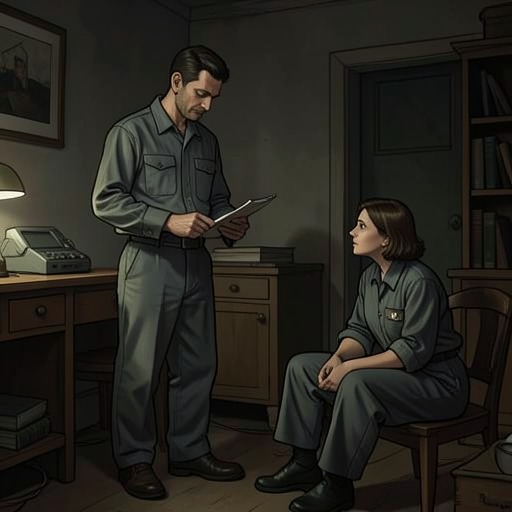
Walter had only recently learned that Amanda was not biologically his daughter. His former wife had repeatedly suggested he was not her father, but he had taken the claims as attempts to hurt him; their different appearances had not seemed decisive, since children do not always resemble their parents. When paternity testing became available, he submitted a blood sample. Five days later, the result established that he and Amanda had no biological connection.
The finding did not produce the sense of betrayal or devastation Walter expected. It did not alter his understanding of their relationship: Amanda was his daughter, and he was her father. He loved her wholeheartedly. In that context, “Biology was overrated” is not a denial of the test result but a judgment about what the result can determine. Biological evidence answers a question of descent; it does not undo the bond built through fatherhood.
Walter also tells Elizabeth Zott that he had not planned to become a parent, yet became a devoted father. His experience makes the expression a statement about how family can exceed intention as well as genetics: the identity that matters to him is the one lived in his relationship with Amanda.
Madeline Zott’s family picture
The idea takes a different form when Madeline brings Reverend Wakely what she calls a family picture. It is a clipping about Calvin Evans’s funeral, with a photograph showing Elizabeth, Six-Thirty, and the grave. Madeline explains that Elizabeth is in the photograph, that she herself is inside her mother, and that Calvin is in the box. The child’s account gathers a family into an image of grief and connection, even though she was not yet born when Calvin died.
Wakely, moved by her matter-of-fact explanation of loss, responds that families are not meant to fit on trees and suggests that people belong to the animal kingdom, not the plant kingdom. Madeline recognizes this as the point she had tried to make to Mrs. Mudford. The exchange gives the expression a wider reach: family cannot always be made legible by a diagram of biological descent, and a family picture can record bonds that a conventional tree fails to show.
Recognition beyond descent
The same distinction informs Avery Parker’s request to become part of Elizabeth’s family. Elizabeth accepts her as family and tells her that Madeline understood this long ago: on the family tree, Madeline placed Avery, not Wilson. The exchange makes belonging an act of recognition rather than a conclusion dictated by biology alone.
Across these moments, the expression does not make blood ties meaningless. Instead, it resists treating them as the sole measure of kinship. Walter’s continued fatherhood, Madeline’s account of a family joined through love and loss, and Elizabeth’s welcome to Avery each locate family in attachment and acknowledgment as well as ancestry.